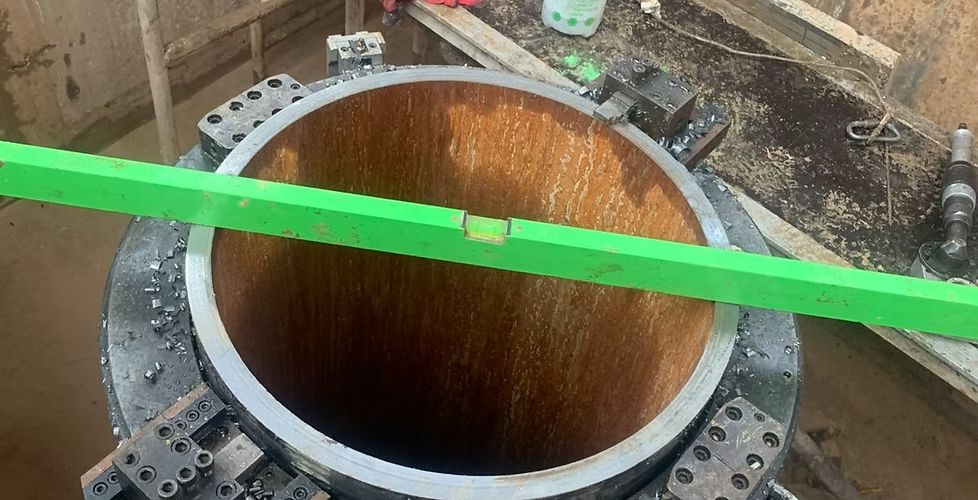
Casing Cold Cutting
1. Safety & Hazard Prevention
Spark-Free, Flame-Free Cutting: Eliminates ignition hazards, which is critical in explosive oil and gas environments.
No Heat-Affected Zone (HAZ): Prevents changes in metal properties that could weaken the casing or pipe.
Reduced Operator Risk: Low vibration and stable clamping decrease the chance of operator injury.
No Hot Work Permits (in most cases): Saves time and avoids risks associated with welding or torch cutting.
2. High Precision & Quality
Accurate, Controlled Cuts: Ensures straight, uniform cuts to meet API or ASME tolerances.
Clean Beveling: Split‑frame tools can cut and bevel simultaneously, reducing the need for secondary operations.
Preserves Structural Integrity: Since no heat is applied, casing strength and metallurgy remain unchanged.
Minimal Burr Formation: Reduces additional grinding work before reassembly or welding.
3. Operational Efficiency
On‑Site Machining: Portable split‑frame machines can be brought directly onto the rig or refinery site.
Quick Setup: Bolt-on, self-centering design supports rapid mounting around the pipe or casing.
Cuts in Tight or Inaccessible Areas: Unlike fixed equipment, split‑frames can operate in confined spaces.
Simultaneous Cutting & Beveling: Saves significant time compared to separate cutting and beveling processes.
4. Versatility
Handles Wide Diameter Range: Split‑frames are available in multiple sizes to suit small through very large casings and pipes.
Works on Various Materials: Equipped to cut carbon steel, stainless steel, and exotic alloys found in oilfield equipment.
360° Accessibility: Encircles the pipe fully, enabling cuts in any orientation (vertical, horizontal, or angled positions).
Adaptable for Offshore and Onshore Tasks: Effective for wellhead modifications, derrick piping, and refinery pipelines.
5. Cost & Downtime Reduction
Minimizes Shutdown Periods: Faster preparation work during drilling or maintenance shutdowns.
Reduces Rework Costs: Clean, precision cuts mean no misalignment or leaks after reassembly.
Extends Equipment Lifespan: Prevents thermal damage, corrosion initiation, or flange distortion.
Lower Crew Requirements: Achieving high-quality results with smaller, skilled teams reduces project expenses.
6. Environmental & Workplace Impact
Low Noise & Pollution: Quieter and cleaner than abrasive or flame cutting.
Chip Management: Produces uniform chips instead of sparks or debris, making cleanup easier and safer.
Improved Working Conditions: Less heat and airborne particles in confined or pressurized spaces.
7. Compliance & Traceability
Meets Oil & Gas Standards: Aligns with API, ASME, and OSHA safety requirements for cold cutting.
Inspection Ready Results: Edges meet specifications for welding inspection without additional prep.
Documentable Process: Many service providers record cutter performance, cut parameters, and visual QA for client records.